
THREE DECADES OF SERVICE & CONNECTION
The Outstanding Work of Island Volunteer Caregivers
BY AUDREY NELSON | PHOTOS BY ANNIE GRAEBNER
In 2023, U.S. Surgeon General Vivek Murthy declared a loneliness epidemic in America. News outlets and health organizations sprang into action, identifying at-risk populations and proposing potential solutions.
But on Bainbridge, the nonprofit Island Volunteer Caregivers (IVC) barely batted an eye. After all, addressing the loneliness epidemic is IVC’s bread and butter—and the organization has been doing it since long before Murthy’s announcement.
IVC was founded as Interfaith Volunteer Caregivers in 1996. Its founders—including islanders Judith Louderback, Joyce Veterane, Joan Treacy, Dick Gregory and Sue and Bob Kuebler—noticed that Bainbridge’s geography was a double-edged sword. On one hand, the island setting and limited public transportation made it difficult for seniors or people with mobility issues to get from place to place. On the other, according to current IVC Executive Director Joanne Maher, the island offered the perfect setting for a care program built around neighbors helping neighbors.
“The power of neighbors to knock at your doors, to call you—we’re in a geographic area that’s really unique,” Maher said. “People here care about each other. They care about the person down the street, making sure that they’re accessible, that they’re OK.”
IVC’s model takes advantage of that built-in, neighborly care by pairing volunteers with “care receivers.” Those in need of care tend to be older adults but also include people with disabilities or mobility restrictions. Volunteers who sign up to help with transportation drive care receivers to medical appointments and errands. Meanwhile, volunteers in the home support program offer companionship, as well as support with basic housekeeping tasks.
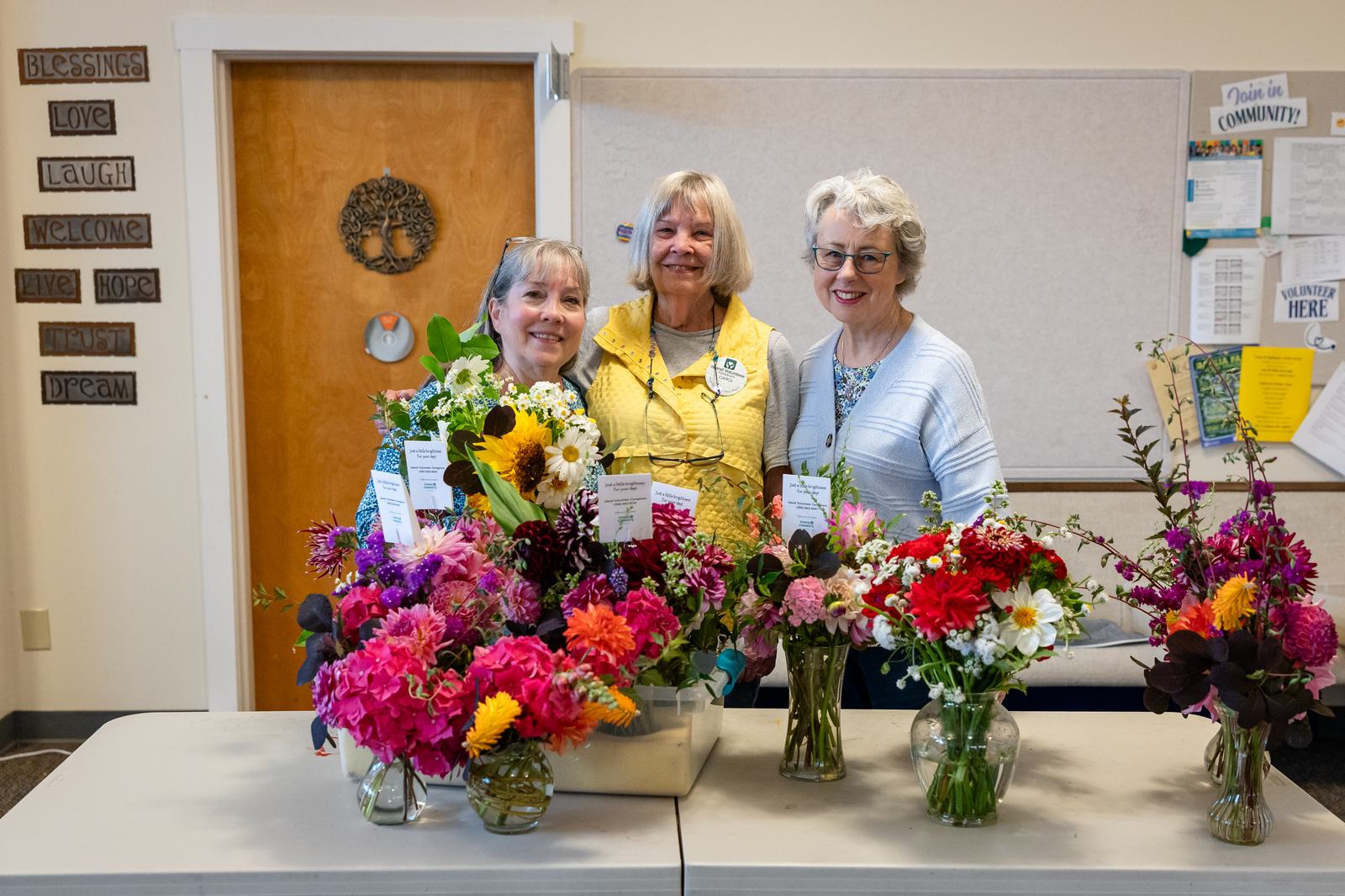
In its early years, IVC had fewer than 30 care recipients and only four volunteers. It received much of its non-grant funding from local faith communities. In 2014, the organization changed its name to Island Volunteer Caregivers to promote inclusivity and reflect more diverse funding sources. Today, IVC is fully integrated into the Bainbridge nonprofit landscape, supports hundreds of care receivers a year and is celebrating its 30th year of providing care. The organization also hosts grief support groups and caretaker respite offerings, provides a supplemental meal service and brings flowers to people’s homes.
But while some aspects of IVC have changed, its core values have not.
“IVC has certainly evolved to meet changing community needs, but essentially that compassion, that volunteerism and helping people stay engaged continues today,” Maher said.
For Maher, IVC’s transportation program paints a picture of the diverse ways the organization supports the island community. In 2025, IVC volunteers drove 52,858 miles in the service of their neighbors, mostly ferrying people to grocery stores, pharmacies and medical appointments in Poulsbo and Silverdale. For adults who don’t drive or have mobility issues, that basic service can be a lifeline.
“All of those things on the island are difficult to get to unless you have a vehicle,” Maher said.
Volunteers also take care receivers to places such as friends’ houses and movie theaters. And although these trips could be classified as nonessential, Maher said they’re actually just as important as medical trips. After all, loneliness was declared an epidemic in part because it’s associated with real health risks: diabetes, heart disease, dementia and even early death. IVC volunteers who shuttle care receivers to enrichment activities help stave off those risks.
Christopher von Koschembahr is one of those volunteers. He got involved with IVC about four years ago, after retiring from Microsoft. He’s seen firsthand how care receivers blossom when they get access to social activities.
“The enrichment is the really cool stuff,” he said, listing a number of his favorite offerings: bingo at apartment complexes around the island, Kreaky Knees walks, excursions to the Bainbridge Island Art Museum. One year, he recalled, he drove several women to see the Christmas lights in downtown Kingston. IVC equipped the van with Velcro jingle bells and thermoses of hot apple cider, and von Koschembahr and his passengers sang Christmas carols all the way home.
During these kinds of group excursions, von Koschembahr sees himself as a facilitator. His hope is that he can encourage the people in the back of his car to connect with each other.
“That is magical when that happens,” he said. “I’ll plant the seeds, but then they’ll all just keep talking, building their social connections.”
IVC also creates social connections between volunteers and care receivers. Andra Sawyer has volunteered with the organization for almost 10 years. She estimates that 95 percent of her shifts with IVC include driving.
One time, she took a man to a medical appointment in Silverdale. During the appointment, he received bad news; in the car afterward, he processed the diagnosis out loud. Later, she discovered that the man had called IVC staff to relay a message.
“He called them just to say…how much he appreciated my efforts and how much it meant to him to have somebody that he could talk to after getting this bad news,” Sawyer said. “And that really sticks with me.”
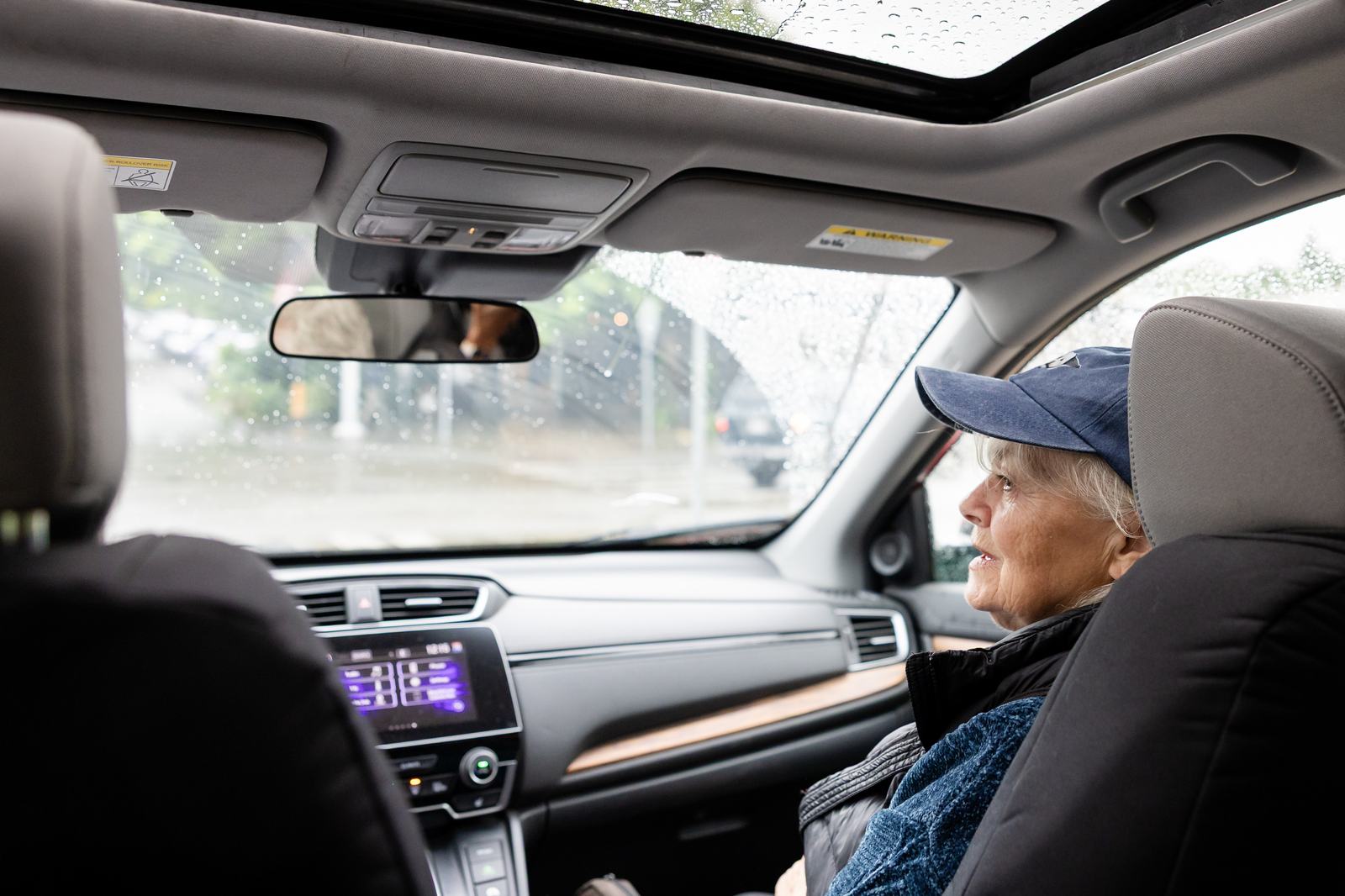
“It’s one thing to drive, which is crucial,” she continued, “but another thing to be able to be there for somebody in a situation like that.”
Sawyer’s situation was a one-off. But many IVC volunteers and care receivers have created long-lasting connections that began while sharing a car. Those kinds of friendships are something that Maher loves about the organization she leads.
“Even just a drive to a medical appointment, you develop a relationship with a person,” Maher said. “You start talking to a person. Relationships form, connections are made and those connections sometimes continue into companionship.”
Julia Taylor has experienced that companionship firsthand. She began volunteering for the organization after moving to Bainbridge in 2021. Initially, she filled in where she could, signing herself up for sporadic care needs that appeared in the daily emails that IVC staff send out to their volunteers.
“Very quickly, I realized that I enjoyed the interactions with the people that I was helping, but that I wanted more connection with them,” Taylor said. “As opposed to just the quick pick-up and drop-off, or picking up medication.”
She signed up for IVC’s companion program and began spending regular time with care receivers. She also committed to weekly drives and trash and recycling pickups. Building routine into her volunteering meant that she developed friendships with her care receivers—friendships that she carries with her today.
“It’s such an integral part of my life now,” she said. “Even my family, they’re like, ‘Oh, it’s So-and-So’s day.’ or, ‘Did you stop by So-and-So’s place today?’ They’re—it’s almost part of our family, because I’ve created these strong relationships with them.”
Like many other IVC volunteers, Taylor gets tongue-tied when she tries to adequately express what the organization means to her. Logically, she recognizes that she’s providing people with companionship, helping with their chores and driving them where they need to go. But IVC is such a powerful force for good, she often forgets that what she’s doing is volunteer work at all.
“It’s more like, these are my friends that I get to cherish and get to see every week,” she said. “And in doing so, I also get to help support them in ways that they need.”
More at ivcbainbridge.org