HITTING IT OUT OF THE PARK (District)
AN EYE ON PERFECTING PROGRAM OFFERINGS
BY AUDREY NELSON
PHOTOS COURTESY BI METRO PARK & RECREATION DISTRICT
Ever dreamed of building LEGOs while enjoying locally brewed beer?
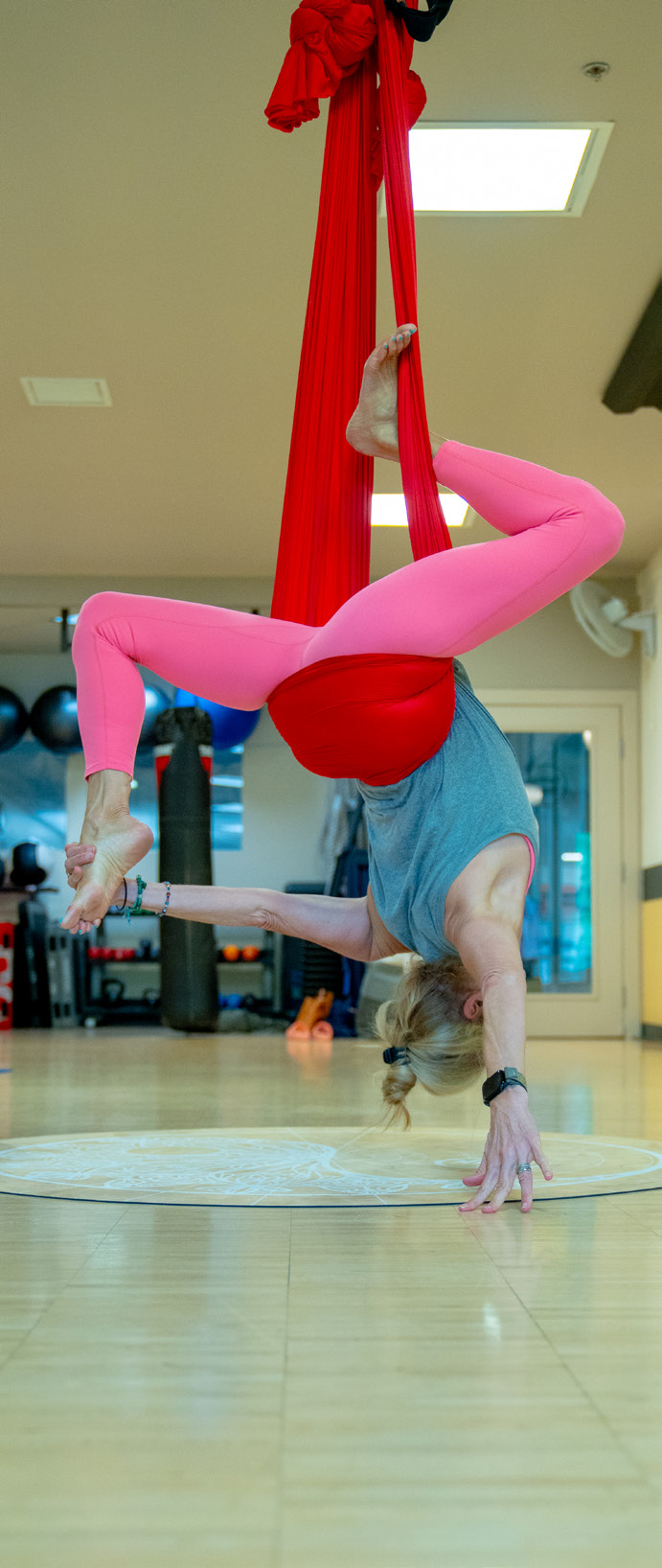
Or holding tree pose upside down in mid-air, suspended by flexible silks?
How about using Tarot cards as guides in your self-improvement journey?
In recent years, the Bainbridge Island Metro Park & Recreation District has made each of these highly specific dreams come true. LEGO Happy Hour, Intro to Aerial Yoga and Tarot for Self-Empowerment were just a few of the fall 2025 events and courses available for registration through the Park District, alongside traditional offerings, such as tennis and swim lessons.
Recreation division director Madison Collins explained that the Park District prides itself on keeping abreast of islanders’ unique needs. “We try to find a little something for everyone,” she said. “We try to serve an entire community with different niches.” According to the National Recreation and Park Association (NRPA) website, America’s modern parks and recreation model rose out of several early-1900s social movements, which advocated for creating outdoor play spaces, maintaining these spaces through a community model and promoting recreation’s therapeutic benefits.
In 1965—the same year the Bainbridge Park District was founded—five different national advocacy organizations merged to form present-day NRPA. The merge highlights the broad responsibility that modern parks and rec districts now shoulder. The NRPA website notes that many of these districts are involved in “advancing mental and physical health, creating climate-ready parks, supporting equity and inclusion, and so much more.” They still maintain green spaces and teach exercise classes—but they also represent and shape the communities around them.
“That’s kind of what’s cool about what we do,” Collins said. “If you build it, they will come is kind of the motto.”
In a survey conducted as part of the Bainbridge Park District’s 2026 Comprehensive Plan, an impressive 67 percent of sampled islanders said they had participated in Park District programs. Satisfaction with the recreation offerings hovered around 80 percent, with about two-thirds of respondents indicating satisfaction with “events, facilities, spaces, and programs that provide opportunities for learning, creativity, cultural experiences, and other enrichment.”
Collins attributed the high approval numbers to the Park District’s history of diverse programming—“from drawing, painting, glass work, Spanish to sports, fitness, pottery, gymnastics, aquatics,” she said.
At the same time, she wants to make sure that she and her staff don’t prioritize quantity over quality.
“We’ve always done a really good job of multiple offerings—sometimes, I think, to our detriment,” she said. “Maybe too many, because you lose focus on what’s the need.”
That’s why, even as the district ramps up its 2026 Comprehensive Plan, Collins and her staff are zeroing in on which programs are the most successful. That entails digging deeper than simple participation numbers.
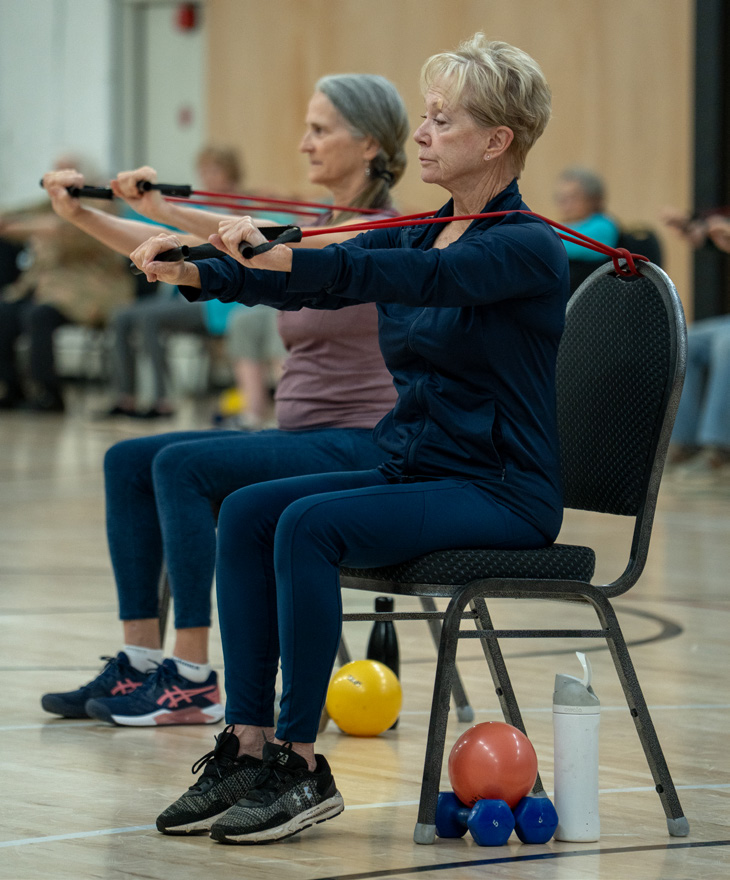
“Sometimes that’s hard, to value something outside of enrollment,” Collins said. But she and her team care about whether people enjoyed their community walk, Silver Sneakers fitness class or
after-school craft club. “I think satisfaction goes beyond, ‘Yeah, it was a full program.’”
This more-than-numbers thinking has guided some of the Park District’s adaptive offerings. Anyone with a disability can request accommodations or support that will allow them to participate in any Park District program, Collins said. But the district does offer some programs geared toward specific communities—including neurodivergent people, who frequently experience sensory overstimulation. Options tailored for this population are often “smaller, one-on-one instruction-based, less noise, less of the chaos that goes on with youth programs specifically,” Collins said.
The district’s adaptive swim lessons have been particularly popular.
Notably, like other organizations on the island, the Park District has begun to turn its attention to planning for the diverse needs of Bainbridge’s aging population.
“We are changing,” Collins said. “So, we’re really trying to be attuned to the changing demographics on the island.”
Like everything else the district does, that starts with listening.
“I rely on my staff to tell us what is new and upcoming,” Collins said. “What is a need? What is going to accommodate the growing needs and growth of this community for different ages and abilities?”