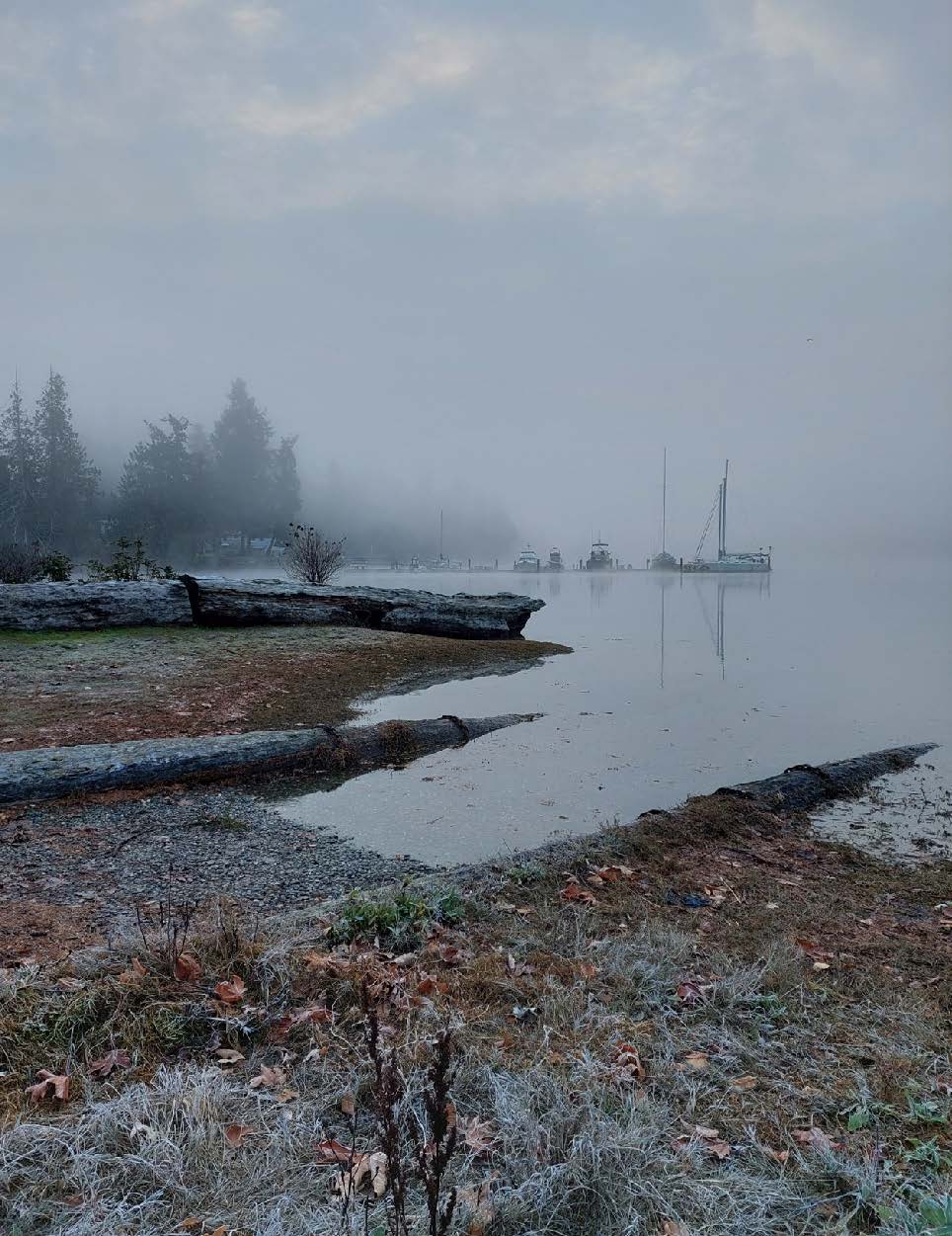
Building a Legacy Beyond Blueprints
By Audrey Nelson
Matthew Coates remembers when he first knew he wanted to be an architect. He was hiking in his childhood hometown when he found an old cabin in the middle of the woods. The roof had caved in, and a tree was growing through the ruins.
“I made this psychological, but also kind of emotional, connection,” Coates recalled.
“‘We cut down trees, and we stack them up to build and shape space into what we call houses.’ Even though that seems so fundamentally obvious…it really struck me.”
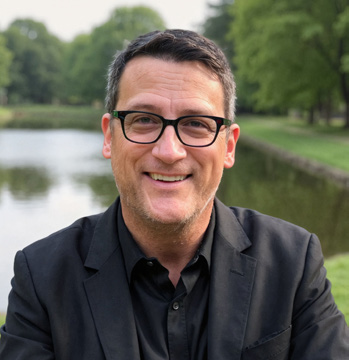
That was the beginning of Coates’s passion for responsible architecture— buildings that limit environmental impact and improve community wellbeing. Decades later, he’s turned that passion into a successful career. He is the managing partner, president and principal architect for Coates Design Architects, a Bainbridge firm. The firm’s 20th anniversary was in 2025; Coates’s team will be celebrating that milestone this year.
Coates Design arose from a difficult time in his life. He moved to Bainbridge in 1999—right as his career began to take off—and spent several years with major architecture firms. He designed international airports, Portland’s REI flagship and worked on the Gates Foundation headquarters design before corporate burnout and his mother’s passing forced him to reevaluate his priorities. “I think I want to create my own destiny,” he recalled thinking.
So, in 2005, he did just that. He founded Coates Design, determined to focus on what are now the firm’s core values: “Do the right thing, take the long-term view and create designs that benefit the environment, the economy and the community.”
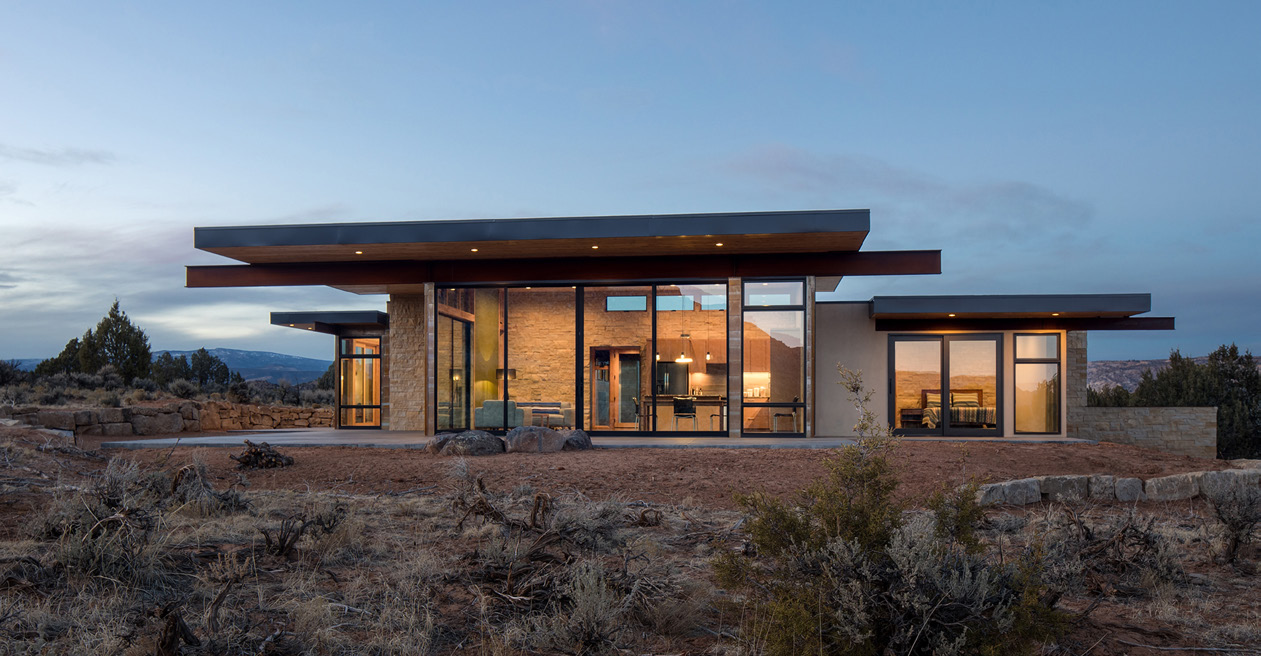
Right away, Coates Design began chasing those goals. In 2009, Coates and his team designed Washington’s first LEED Platinum-certified single-family residence in the United States. (LEED is a government certification program that rates sustainable buildings, and Platinum is its highest honor.) The home allowed Coates Design to put its environmental commitment into action. And because LEED’s residence certification was relatively new at that point, the project also posed unique challenges for the Coates team.
“Not Herculean today, but back then, kind of unheard of,” he said.
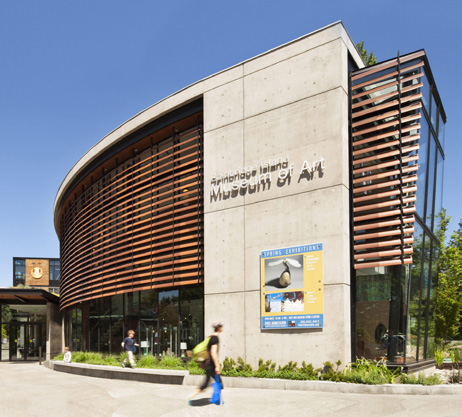
After completing the LEED project, Coates and his team turned their attention to designing the Bainbridge Island Museum of Art. Because the museum is near the ferry terminal, it is one of the island’s most visible structures. That wasn’t lost on Coates.
“As an architect, the greatest gift is to have people really enjoy your buildings,” he said. “And I sense that the Bainbridge Island community is proud of its art museum.”
BIMA is one of many projects that Coates and his team have designed to boost the Bainbridge community. The firm’s diverse portfolio includes luxury residential design, basic renovations and private development. But Coates’ favorite projects are the pro bono work he does for local organizations.
One example is the reHOME project. Partnering with Friends of the Farms and Clark Construction, Coates Design used repurposed materials to build three sustainable tiny homes at the Morales Farm on Bainbridge which have allowed its seasonal farm interns to stay on the farm while working.
The project was a community effort. “There was a team of volunteers who took studs—wood studs that had been taken out of old buildings—and pulled the nails and nailed them together and made all the framing in the reHOME houses,” Coates said. “It was amazing.”
That kind of support is what Coates hopes to celebrate this year. “We’re going to have a big party, invite all our friends, family, current and past clients, associates, people we work with— kind of everybody—and just look back on the 20 years and be grateful for all that we have,” he said. “All the lessons we’ve learned and friends we’ve made and lives that we’ve impacted.”
But Coates’ firm will not be resting on its laurels. Coates is working with the Bainbridge Island Metro Park and Recreation District on a “legacy art park,” where site-specific artwork will be integrated into an outdoor space. He sees this kind of work—beautiful, functional and innately good—as a key part of Coates Design’s next 20 years.
“I’ve designed buildings all over the planet,” he said. “I don’t need to scratch that itch. Now I just want to work with good people on good projects and do good work.”