
A GOLDEN AGE
Senior center blossoms to meet the needs of an aging population
BY Audrey Nelson
Fifty-four.
That’s the percentage of Bainbridge Islanders who are more than 50 years old, according to Reed Price, the executive director of the Bainbridge Island Senior Community Center.
That number, which follows a nationwide aging trend, is predicted to grow as current residents get older and new retirees move to Bainbridge. As a result, more islanders will soon face the risk of social isolation, which particularly affects older adults, according to the National Institute of Aging.
It makes sense: Frameworks such as school, work and kids conventionally structure our social lives. But for retired adults, “a lot of the signals or mechanisms by which we connect in society sort of slip away,” Price said. That prevents many elders from easily accessing engagement and support and can, in turn, lead to unwanted health outcomes.
Still, retirement-induced isolation isn’t inevitable. Too often, Price noted, conversations around transitions fail to acknowledge that aging, too, is a major transition. Like other milestones, it requires preparation—and involves some growing pains.
“We spend all this time thinking about is my kid ready for pre-K or ready for school?” Price said. “Are you ready for college? Are you ready for working after school?…We should also be asking, are you ready to retire?”
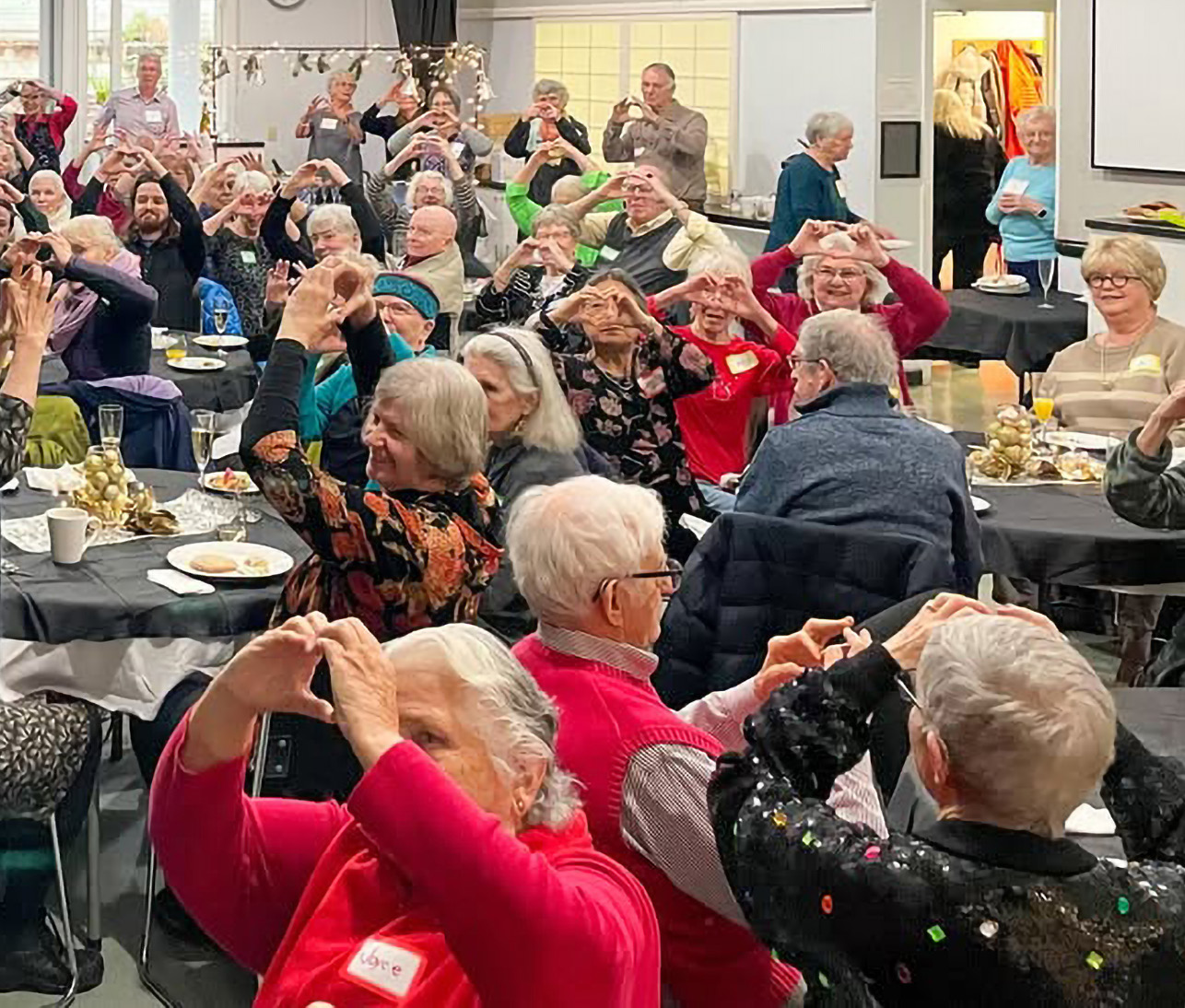
Since 1985, BISCC has asked that question to thousands of elders across the island. The senior center has explicitly devoted itself to rejecting what its website calls “outdated concepts of aging”—such as the assumption that elders “are not as bright” and “don’t have as many insights to offer,” Price said. The center now hosts more than 60 hours of educational and social programming a week.
BISCC’s inclusive, empowering approach has resonated. In 2017, when Price became executive director, the senior center had 780 paying members. Today, it has around 2,100—a 169 percent increase.
“You figure with any membership of any club, of any organization, there’d be a lull, a seasonal lull or something,” said BISCC program manager Lena Wilson, whose days are a whirlwind of coordinating classes and excursions. “We’re not finding that. We’re not finding that at all.”
For Wilson, the flood of people paying $25 annually for membership is telling.
“That means our elders want more,” Wilson said. “That means they want to engage more. That means they want to live their best life more.”
BISCC has found creative ways to accommodate the groundswell of members. There are yoga and meditation classes, sound baths and writing groups; there is a Queer Elders Family Group and a number of lectures; there are caregiver support groups and informational sessions on aging-related topics; there is a podcast, multiple book clubs and even the Waterfront Thrift store, which is open to the public and extends a 10 percent Friday discount to BISCC members.
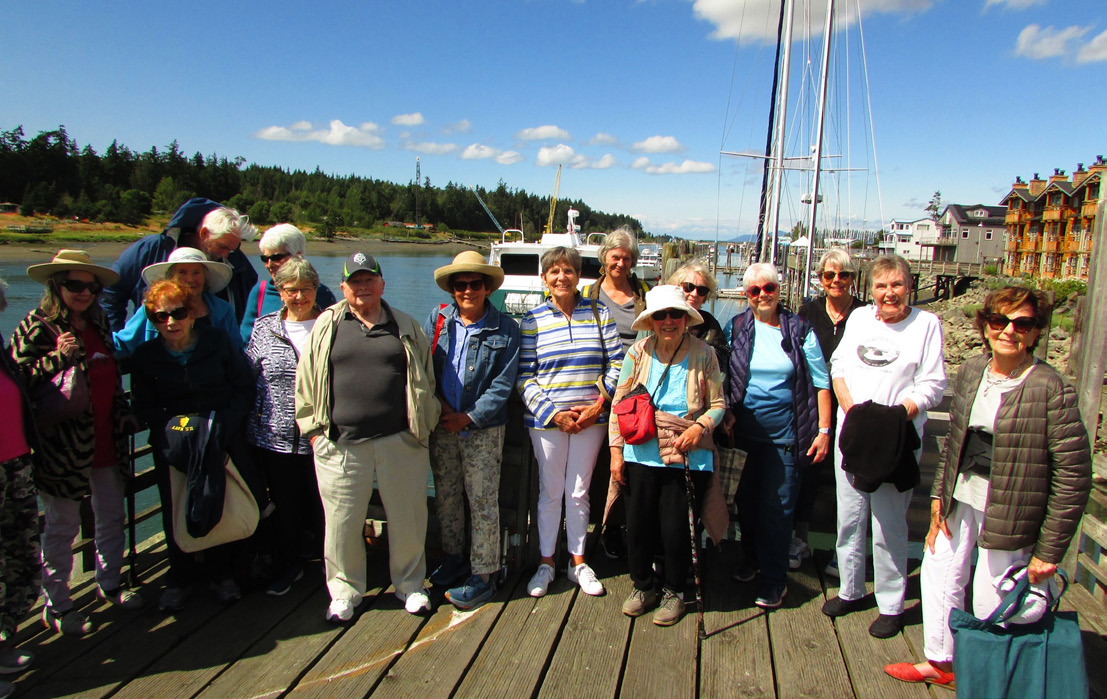
The senior center also helps members travel both regionally and globally. Wilson, who coordinates local travel, has helped people attend the Skagit Valley Tulip Festival and take a Crab Cruise in the San Juan Islands. Currently, local offerings are popular but limited, as the senior center’s large bus requires a commercial driver’s license to operate. But BISCC is working toward acquiring a smaller, more modern van, which would open the possibility of more frequent excursions across the water.
“All over the place in Seattle,” Wilson said. “You name it—a musical show, maybe it’s the [Museum of Flight], maybe it’s MoPOP at Seattle Center. All these random different things we haven’t been able to offer yet.”
BISCC also partners with Collette Travel Services, a guided tour company that helps members travel farther afield. Wilson said the center has spearheaded trips to South Africa, Brazil, Australia, Greece and New York City, among other locations.
Many BISCC members find value in traveling as older adults, Wilson said. But the center has options for homebodies, too. Many members enjoy spending unstructured social time at the center—a little white building just north of Waterfront Park.
“You can either come here because you want to take a class on Shakespeare or the Constitution, or you want to do line dancing or yoga—or you could just show up and have a cup of coffee and read the paper and see who’s here,” Price said.
BISCC’s abundant offerings and increasing membership numbers have created just one problem. BISCC is now “bursting at the seams,” Price said—metaphorically, but also physically. There are too many people for the limited space.

In September 2025, the city council unanimously approved a 30 percent completed conceptual design for a new, larger BISCC building. (The current senior center building was built in 2012, on city-owned land. Although the building is leased and operated by BISCC, the city still owns the land and has a say in any major changes or expansions.) Among the proposed changes and additions: a main entryway facing Bjune Drive instead of the waterfront, expanded parking, and a multipurpose hall that can accommodate up to 200 people. The project’s development team is also working with Bainbridge Prepares and the city’s emergency management coordinator, Ann LeSage, to ensure the building will function as a dual resilience and disaster hub.
The construction will cost an estimated $20 million in full, and so far, BISCC has raised about $2 million for the project. The senior center’s board authorized an additional $400,000 from its contingency fund, while a Washington State grant added $100,000. With a total of $2.5 million secured, BISCC hopes to raise the rest of the money in time to break ground on the new building in 2027.
Programming will continue to operate during construction, which Price estimated will take 14 to 18 months.
Price and his staff have a vision for the new building. They want it to offer a meaningful gathering place not just to elders but to the entire community. “We have some wonderful specific-use spaces on the island, but we do not have the kind of place that could be a community dinner location, then a concert location and then a square-dancing location and then a lecture hall—all in the same week,” Price noted.
Building this kind of multipurpose space is in line with BISCC’s goal to facilitate community at every age. Intergenerational programs, such as the SilverTech crew, which pairs elders in need of technology help with tech-savvy high schoolers, are already contributing to this effort.
“The word is getting out there that we’re really moving toward a senior and community center,” Wilson said. “We’re getting 20-somethings and 30-somethings and 40-somethings joining now.”
To Wilson, a broader interest in the center is understandable. Like many of her colleagues, she sees BISCC as a place that fosters community and friendship in everything it does. Sometimes, members take hold of her hands or become emotional as they tell her how much the center—and her programming—means to them.
“We’re learning resources, information, but we’re also coming together as people, humans, and community,” Wilson said. “And that has so much weight and value to it, I can’t even find the words to describe it.”