
WHY BE KOI?
BY KERRIE HOUSTON REIGHTLEY | PHOTOS COURTESY PHIL HERRING

By all measures, everything Phil Herring touches eventually turns to gold. This time around, the owner of Bainbridge Island’s Discount Koi is selling the fish known as the “swimming jewel” of the underwater world.
Beyond the koi themselves, Herring also designs and builds their habitats for a wide range of clients—from those who purchase a 250-gallon plastic tub from Home Depot to owners of multi-million-dollar homes who fill their koi ponds with 30,000 gallons of trucked-in water. No matter the budget, everyone is treated to the same charm, verve, and wit ... not to mention his impressive depth of knowledge about filtration systems and fish health.
Koi, also known as Nishikigoa, (from the Japanese word Nishiki) are associated with elegance and beauty and symbolize good luck, prosperity and good fortune. Originally brought to Japan in the early 19th century from China as a food source, the fancy cousin to the common carp—whose fossils date back 20 million years—has come a long way. Koi were introduced to the world stage in 1914 during the Tokyo Taisho Exhibition, when Japan’s Emperor Hirohito was gifted the ornamental fish to fill the moat of his Tokyo Imperial Palace.
Herring said that compared to their royal predecessors, his fish niche is “in the gutter” of the koi business. There are 100 types of koi, classified by colors, patterns and body conformation. Herring explained that the most expensive koi are collector/show fish, the costliest of which was S Legend, a 39-inch red and white female that sold at auction for $1.8 million. “It died a year later,” he said. “If you’re spending a million dollars on a fish, you can probably handle that.”
“Mine are an analogy to the dog world,” he continued. “I sell purebred fish, but they don’t represent the breed standard in the way of a show animal. So, these are pet quality. They’re beautiful but not going to be shown. And they’re not for eating, either. We don’t eat our pets.”
From his home-based shop on Puget Sound Bluff, local customers can schedule an appointment to hand-pick from koi varieties including Butterfly, Standard Fin and Butterfly Fin, which range from around $18 to $85, along with Japanese Trapdoor snails, which run $2.50. Patrons may also order online. Herring ships everywhere within the Continental U.S. in a specially engineered insulated packaging material made from biodegradable corn. His favorite shipping success tale was of five fish mailed to Texas in 107-degree weather. “It was supposed to ship overnight on a Thursday, but UPS messed up and delivered on a Monday,” said Herring. “The insulation was so good that they arrived alive and, according to the customer, spunky.”
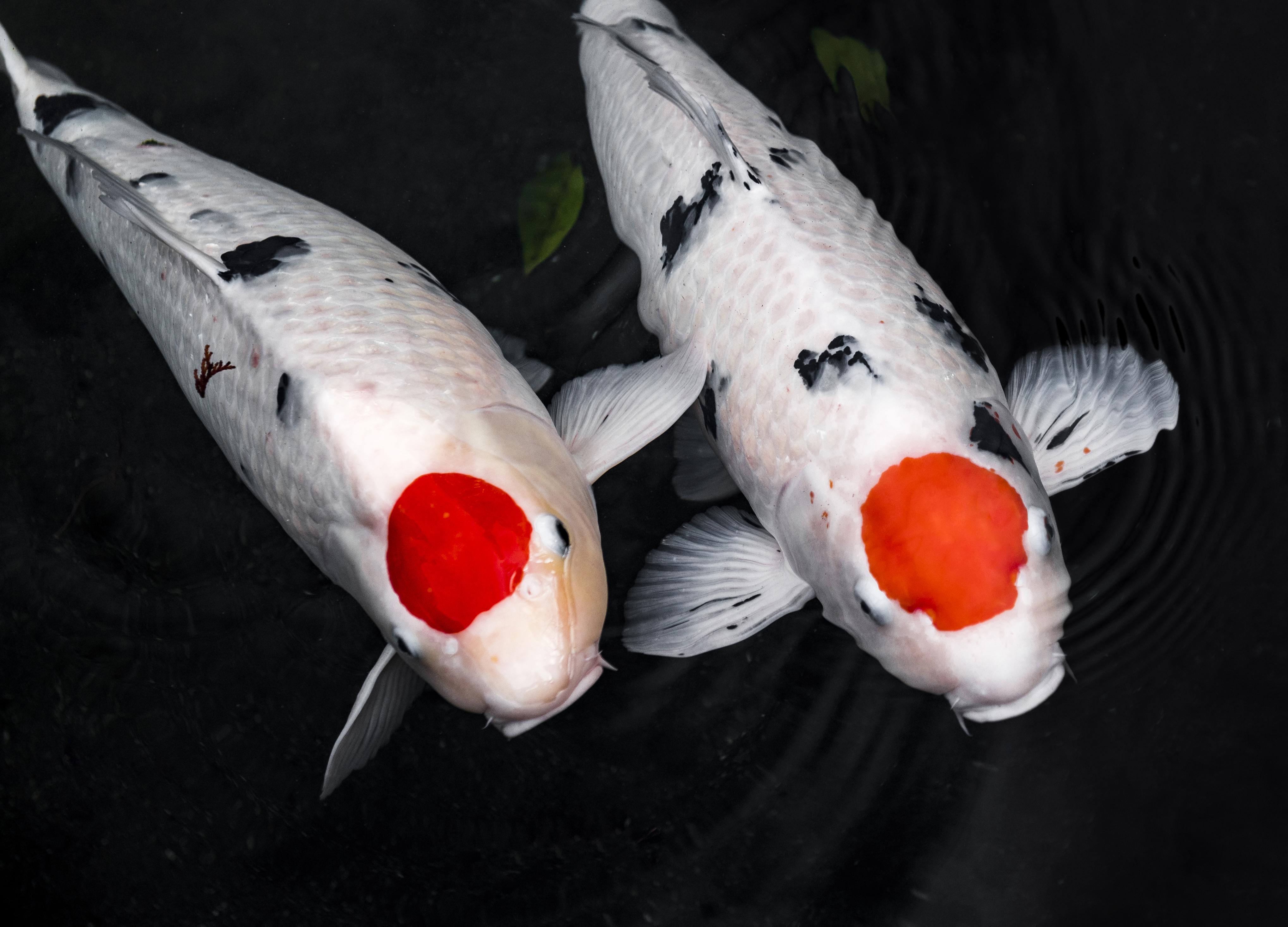
His koi, Herring said, can grow to 30 inches, but you must take good care of them to see that happen. “You can even train them to eat out of your hand,” he added. “But I’m not big on teaching fish. I want my fish outdoors to be afraid of things that come to the edge of the pond.” He then shared an anecdote about river otters near his home that he described as serial killers. “They kill every fish in your pond and won’t leave until they’re done.”
Herring started Discount Koi in 2020, wanting to change careers in the midst of the first COVID lockdown.
An early job playing trombone in Stan Kenton’s band led to performances at venues including Carnegie Hall, Venice Opera House, Kennedy Center and Madison Square Garden. “That was my college,” he said. “I consider that a foreshadowing of what my adult life would be, of getting intensely focused on things.” Later, Herring’s love for music led to owning a music publishing/artist management company, where he honed his instinct for marketing and advertising. His career then spanned Walt Disney Educational Media; ownership and creation of a multi-million-dollar ad agency with clients such as Nike and American Express; millions in sales with the founding of Sailboats.com; and consultation and copywriting for local businesses.
What does that have to do with selling koi? During the pandemic, all the places where Herring used to buy koi shut down. He wasn’t ready to retire and decided that the time was right to try selling them himself. “I saw a local opening and knew I had enough experience in digital marketing to do something,” he said. “It’s such a weird little niche, and most of the people doing it were doing it in a very unsophisticated manner.” It just so happened, he said, that his house is “perfectly laid out,” with a side room and entrance, access to running water and power and a pull-through garage. “We had everything I needed to do this.” His wife, Kim McCall, of Kim McCall Designs,
“reluctantly—very reluctantly” agreed.
The best advice Herring gives to prospective koi owners is to study how to build a koi pond—not
just a pond. “There are specific things that need to be done that will make it easier to maintain. The fish will be safer, healthier and happier, and you will be, too,” he said. “Our business is designed for people who don’t know a lot about koi or ponds. There’s no reason to be concerned about what you don’t know. We’ve made all the mistakes, so you don’t have to.”
