
The field They Built
How two Bainbridge mothers helped rebuild girls Little League softball at Strawberry Hill
BY Sheri Renner | PHOTOS BY DINAH SATTERWHITE
Much of Bainbridge was focused on the Bainbridge High School boys baseball state championship run in spring 2025. It was the kind of season that pulls an island together game by game until everyone is paying attention.
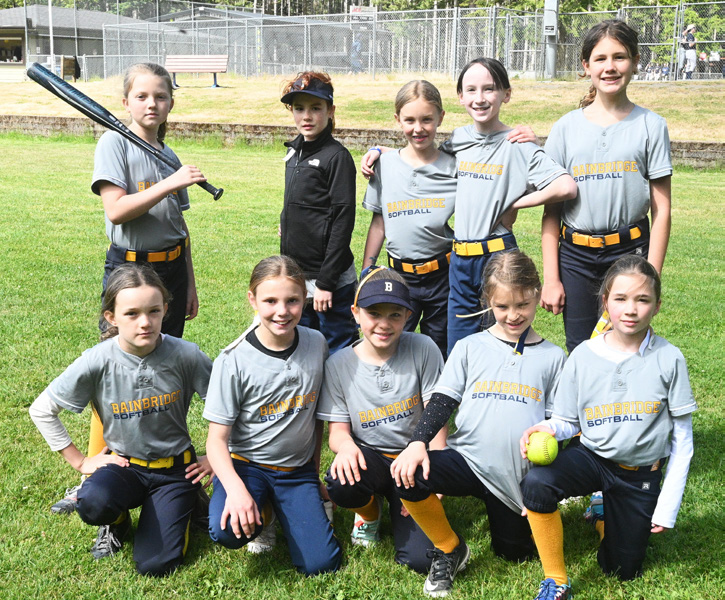
At the same time, just a few miles away, another story was unfolding more quietly.
Five years ago, Lindsay Fiorito and Stacey Dixon stepped into a struggling girls Little League softball program with about 40 players, including their daughters.
Strawberry Hill had been designated for girls softball, but the facilities had fallen into disrepair. The program lacked maintained fields, functioning scoreboards and its own batting cages, forcing players to rely on limited access elsewhere for training.
“It looked like nobody had touched it in years,” Dixon said.
Armed with little more than a vision, the two women set out to make a change.
Parents, players and volunteers jumped in to help, hauling out debris, mowing grass, repairing fencing and slowly bringing the fields and facilities back to life.
What began as cleanup quickly grew into something much larger, as Dixon and Fiorito worked to rebuild both the softball program and the community around it.
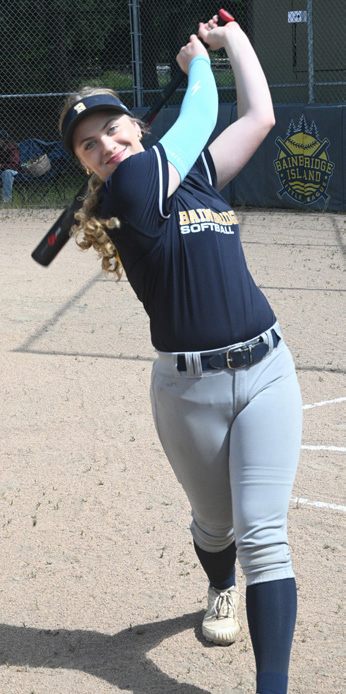
At the same time, they were recruiting players and figuring out what it would take to build permanent batting cages at Strawberry Hill.
“We wanted girls to feel like they could just come be themselves,” Fiorito said. “We didn’t want it to feel exclusive or high-pressure.”
Neither woman came into the role with experience running a sports program or managing major improvement projects, but over time, they taught themselves how to navigate fundraising, volunteers, contractors and construction bids.
The partnership between Dixon and Fiorito became part of what sustained the effort. When one hit a wall, the other kept pushing forward.
Working on their own, the two women raised more than $100,000 through private donations, business sponsorships and grants to fund improvements at Strawberry Hill.
The money eventually funded the construction of new batting cages, one of the most ambitious projects the women had undertaken.
As the program grew, it helped create a more connected pathway for girls softball from childhood to high school.
The Bainbridge High softball coaches began volunteering, hosting clinics for the girls and attending their games. And the growing participation helped launch Woodward Middle School’s first girls softball team.
Today, the program serves more than 125 players ages 7 to 16. “This is becoming a feeder system,” Fiorito said. “Similar to Bainbridge Island Swim Club, where girls can start younger, build skills over time and continue developing all the way into high school.”
For Dixon, the mission eventually became bigger than her own family. Her daughters are no longer in the program, but she has stayed involved anyway.
“I just wanted girls on this island to have the same opportunities,” she said.
One of the latest improvements at Strawberry Hill was lighting around the batting cages and a new storage shed. Earlier this year, the partners approached the Rotary Club of Bainbridge Island for grant funding to help make the project possible. The new lighting will allow girls to continue training during the darker winter and early spring months, creating more opportunities for year-round training.
For Rotary volunteer Mike Cox, who helped review the request, the project stood out because the community had already done so much of the work.
“This wasn’t a group waiting for someone else to solve the problem,” Cox said. “They had already built the momentum themselves. Rotary’s role was to support what was already happening.”
“The lighting gives the players more time,” Dixon said. “And over time, that matters.”
Recently, Fiorito and Dixon stepped inside the newly completed shed and paused for a moment. After years of patching things together and building incrementally, the structure felt significant.
“We just looked at each other like, ‘Wow. We actually did this,’” Fiorito said.
There is still more work ahead. But these days, the program no longer feels like a startup.
On busy nights, players move between games and batting cages as families cheer from the fences and the snack shack grills hot dogs nearby.
Strawberry Hill now feels like home.