
SCHOOL HOUSE (ON THE) ROCK
Nursery School Celebrates 60 Years
BY CHRISTY CARLEY | PHOTOS COURTESY BAINBRIDGE COOPERATIVE NURSERY SCHOOL
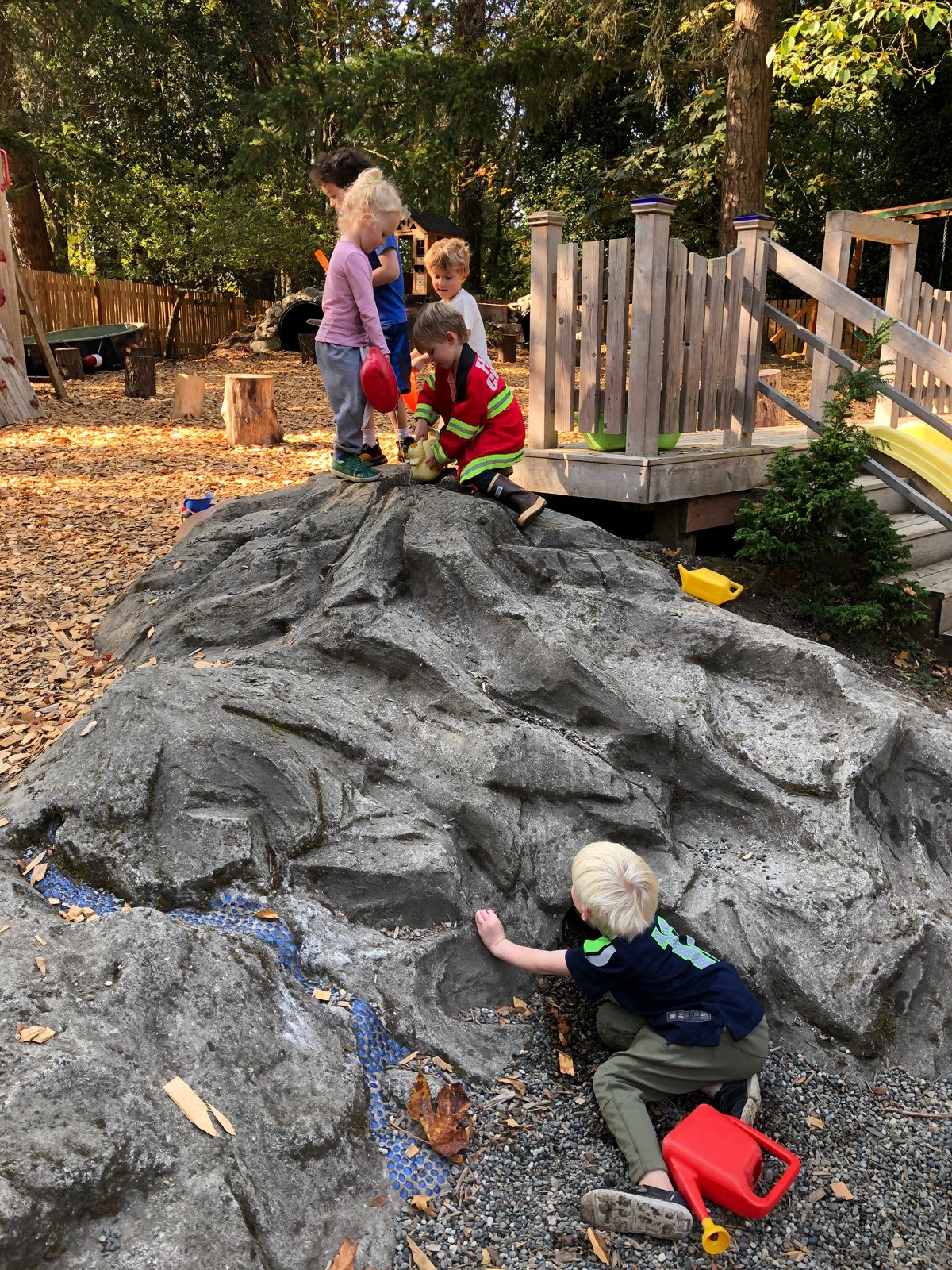
Tucked into the idyllic woods behind bustling Winlsow, Bainbridge Cooperative Nursery School feels like a world of its own. High ceilings and big windows allow for ample natural light and views of the verdant surroundings. A large front porch (which sometimes functions as a second classroom) further blurs the boundaries between indoors and the natural world.
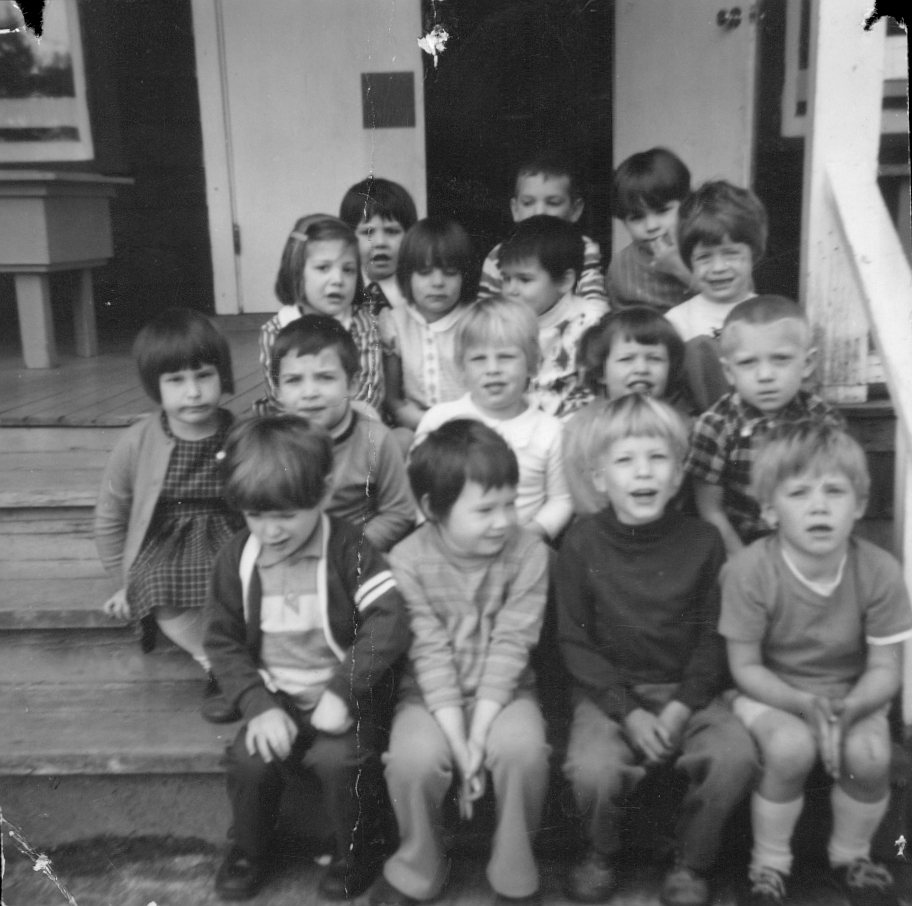
The building that now houses BCNS was constructed in 1972 on land donated by a parent, Lois Curtis. But the foundations of Bainbridge Island’s oldest preschool date back to 1963, when a group of island moms banded together with the shared goal of providing their kids with a creative, play-based education. They contacted educator Denise Farwell, who helped them develop a curriculum for the school and hire its first teacher. For nearly a decade, children learned and played in the old Wing Point Clubhouse.
Since its founding 60 years ago, BCNS’s core philosophy of “learning through art and play” remains at the school’s core. “All areas of development are really built on those two things,” said Kari Wetzler, who teaches Pre-K for 4- and 5-year-olds.
Wetzler volunteered at BCNS as a Bainbridge High School student in the 1990s. When she moved back to the island as an adult, her three children attended BCNS. She started teaching there in 2012. The main focus for BCNS, she said, is “the development of a child’s social and emotional intelligence.”

While academics may be explored in preparation for kindergarten, “learning how to be curious, flexible, perseverant, kind, collaborative and empathetic will provide the foundation for a lifetime of successful learning,” said Wetzler.
Kaye Bjur, BCNS’s administrative director, described the school’s philosophy as “child-driven.” There’s room in the curriculum to meet children where they are and to focus on any particular interests that arise. Plus, students have plenty of time to explore independently. “We have a lot of Montessori aspects,” Bjur said. The classroom has stations for art and building with blocks. There’s also a play area that changes themes throughout the year, shifting from a vet clinic to a kitchen to a spaceship. Outside, a small kitchen includes a wooden stovetop, a sink and various plates and utensils—all for making food out of mud. “I loved the mud kitchen,” said recent-grad Veda Rae Lewis, who was age 5-andthree-quarters at the time of the interview.
Room to explore is essential, but directed activities and group circle time also play an important role in the curriculum. Students build fairy houses every year and compose stories that they share with their classmates. While the preschool class (ages 3 and 4) is learning about routines and building trust with their teachers, Pre-K students are focused on problem-solving and inclusivity.

“The structure of the day allows for practicing working in a group but also exploring their independence in their learning environment,” said Hillary Scheer, who teaches the younger class.
If group work is important for students at BCNS, it’s just as essential for their parents. As a cooperative, families are deeply involved with the functioning of the school. BCNS is run by a board of directors composed solely of current parents. While only occasionally in the classroom, parents care for the grounds and sort student artwork, among other roles. Alumni parent Laura Lewis (mom of Veda), who served as board president for two years, was also particularly fond of her role caring for the class pet: a three-legged gerbil named Elsa.
Lewis moved to the island in 2016 and began the preschool search for her children. When she called BCNS, she learned there was a waitlist, but Bjur invited her to a “summer playdate” to meet other families.
“When I got there, I was like, ‘Oh my gosh, these are my people,’” Lewis said. When she got the call that there was an opening in that year’s class, she was “ecstatic,” and soon formed bonds with other parents. “The school was the first place that I felt like I belonged, and I was part of something in the community.”
Strong connections are common at BCNS. Carol Stover, whose children attended the school in the 1980s and who later worked there as its administrative director, said she loved the “closeness of the families” at BCNS. “Forty years later, I still have a lot of those same close friendships.”
A parent-run school means a constant change in governance, but despite its location change and updates to the playground, the essence of BCNS has remained largely the same since 1963.
“There’s something unique about BCNS ... something that is constant,” said Scheer. “I think the magic has stayed.”
