
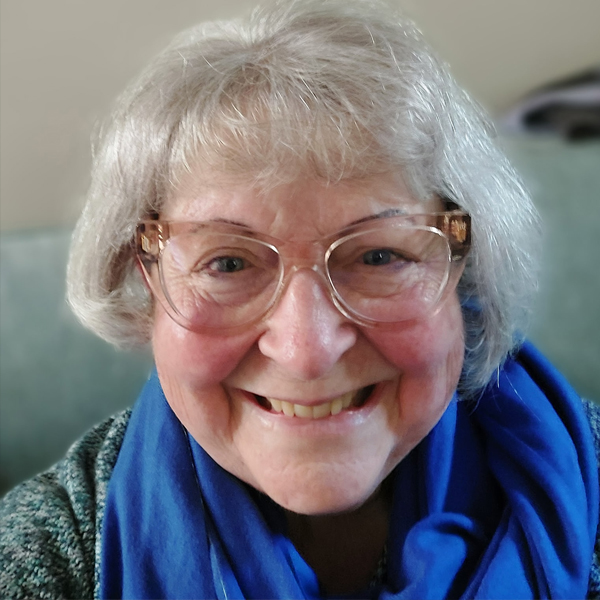
GETTING TO KNOW TAMI ALLEN
BY CONNIE BYE
Even after 20-plus years, Tami Allen’s job as Bainbridge harbormaster still evolves. She’s part of the police force, overseeing the island’s 53 miles of shoreline and the waters halfway across to other cities. She deals with abandoned, sinking and drifting vessels. Allen also works with other agencies on disaster management. And if you’re in the mood for some Zydeco, give her fiddle a listen.
How did you get started? When the city first hired me (in July 1999), it was as a contractor. I had just finished my master’s degree in port management from the University of Washington. It’s a master of public administration with an emphasis in port management, so it was a perfect fit.
How often do you deal with abandoned vessels? It’s not happening in Eagle Harbor with the frequency of when I started, but but we’re preparing for the ability to respond to anything.
What did the pandemic reveal about preparedness? We’re really ahead of the game—but at the same time, way behind. Are we ready to go two months without a Safeway truck, two months without power or fresh water?
How did you get into Cajun music in the Pacific Northwest? I play fiddle in a band with my partner, Claudette Boudreaux, called WHOZYAMAMA. Claudette is from Louisiana, and when people from Louisiana meet, they ask where you’re from, but pretty soon they want to know your father’s last name, your mother’s last name. They just keep going until they find some connection.
To join the emergency flotilla, email tallen@bainbridgewa.gov.
that’s because I’m constantly talking to the owners when their boats stay longer than 30 days. I’m a big advocate of prevention, and we do that diligently in all our harbors.
Around 2010, we finalized the Dave Ullin Open Water Marina. When that happened, a lot of the issues were resolved. It does everything that a shore-based marina does. (Boat owners) pay rent, they’re sewage-compliant, they have insurance, proof of ownership.
Right in the middle of Eagle Harbor, we have 16 full-time, live-aboard vessels on buoys.
What’s your role with emergency preparedness? I’m just a small piece. In case of disaster, our essential assets—firefighters, police, electricians—might not live here, or they might be off island that day. If the bridge was damaged or ferries weren’t running, we would need a way to get them here and back to their families after their shifts.
We’ve used Marine 8 (a police vessel) to evacuate a shoreline when a road has washed out. If we had a wildfire, a section of the island might need to evacuate by boat.
The boat becomes a mobile communications system. The boat also can be transportation; it can provide shelter.
Where do things stand with organizing an emergency flotilla? My goal is to sign up 100 boats; I’m about halfway there. For every boat, we need three or four trained volunteers: a captain, radio operator, dinghy operator. I also can use a lot of deck hands. They don’t have to own a boat; they just have to be willing to get an emergency credential from our city so that they can be on board.
In June, we’ll be part of Cascadia Rising 2022, a statewide earthquake drill. We’re training for a specific type of event,