From Scandal to Love and Loyalty
A Novel Set Against the PNW Landscape
BY LUCIANO MARANO | PHOTOS COURTESY THOMAS LION
Time spent on Bainbridge Island—be it years of residency or simply a brief visit—holds a special place in the hearts of many. Author Thomas Lion is no exception.
The story of his particular connection to the island, however, is exceptional.
Long before he became an author, and while still known by a different name, Lion was a drug trafficker who, along with another man, operated a large marijuana distribution ring in Indiana and Michigan in the 1970s and ’80s. Eventually, they were indicted, but both fled before being apprehended.
As fugitives, they were featured on an episode of “Unsolved Mysteries” in the early ’90s. Just days after the broadcast, Lion was arrested. He’d been living on Bainbridge Island (on the lam, as it were) under an assumed name. His accomplice was captured not long after. Years of incarceration followed, as well as the eventual publication of Lion’s first book: “I Was An Unsolved Mystery: An American Fugitive Story.”
And while those events are long since in the author’s rearview mirror, Lion’s memories and experiences from that time play a large part in the story of his new novel, “Osprey Gold,” along with his love of animals, nature—the Pacific Northwest landscape, specifically— and his eye for familial conflict.
“If a reader comes in knowing a little of [my] background, they may recognize certain emotional currents,” Lion said. “If they come in cold, they’ll meet the story on its own terms. Either way, the experience should be the same: a narrative about people trying to find their footing after the ground shifts beneath them.”
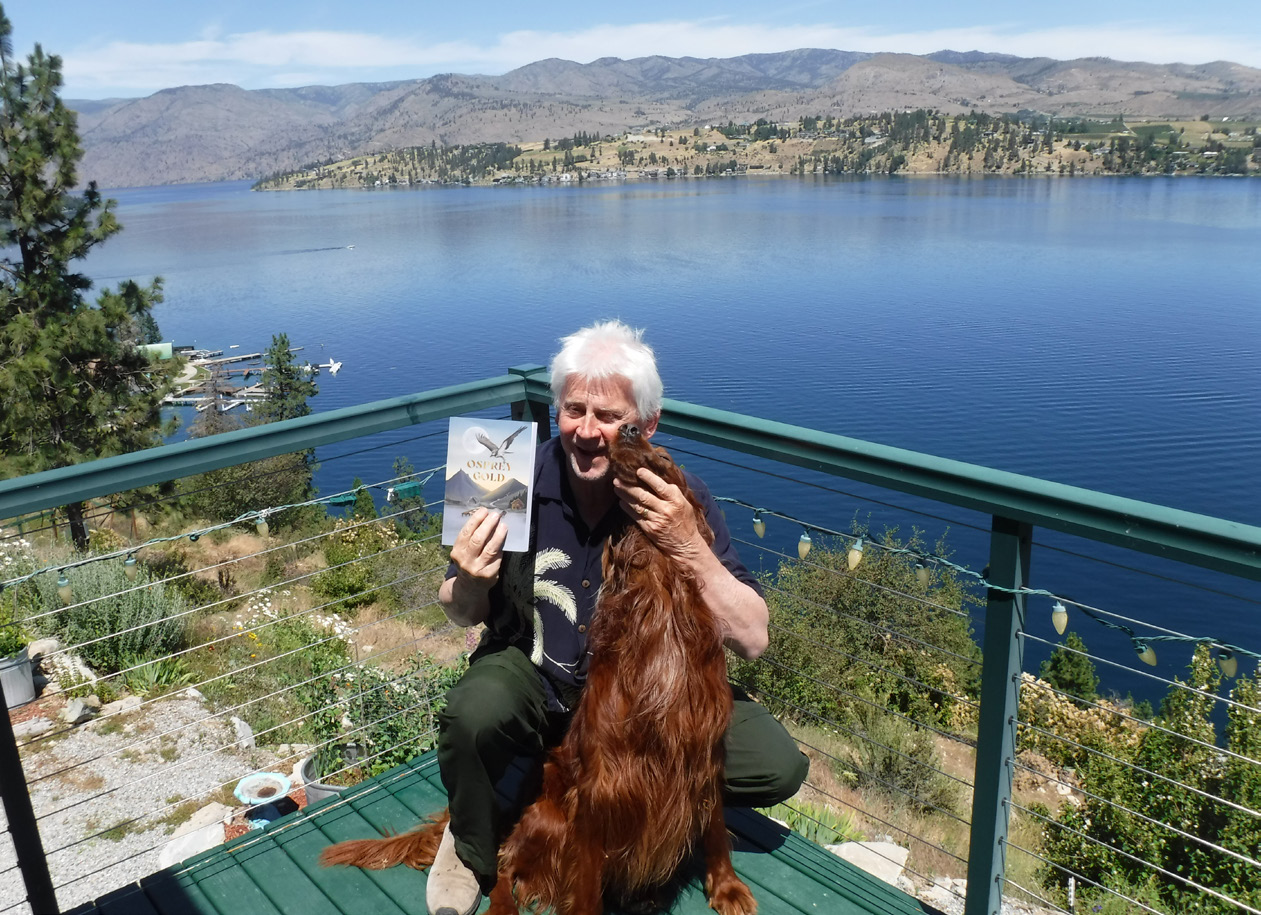
“Osprey Gold,” available in eBook and paperback, follows an estranged son who returns to his family’s home on Osprey Mountain to find his relatives on the brink of losing everything in a valley fractured by competing factions and deepening division. And while the book is not actually set on Bainbridge, Lion said the island, being “where the most dramatic chapter of my past unfolded,” could not help but affect the plot, just as it “has a way of shaping the people who intersect with it.”
“What matters to me is that the characters feel true—their silences, their loyalties, the way they carry old wounds and private histories. Those elements grew out of lived experience, but the book isn’t a memoir in disguise.”
Critics have praised Lion’s depictions of nature and wildlife, which were, for him, as important as any human character.
“The Pacific Northwest has never been a passive landscape in my life,” Lion said. “It’s a place where the natural world doesn’t just sit in the background, it intervenes. Years ago, I had a remote vineyard destroyed by bears, and that changed the way I understood nature. It taught me that out here, you’re not in control. You’re part of a larger system that doesn’t bend to your plans.
“On the other end of the spectrum,” he added, “I’ve spent years around ospreys—long enough that I’ve learned their calls and they’ve learned mine. I can whistle or call out and have them circle overhead or land in the trees near me.”
And that, Lion said, is why the region has inspired so many artists and authors: “In rural Washington, the land doesn’t soften itself for you. It meets you exactly as you are, and you learn to meet it the same way.”
Current events and contemporary political debates also influenced the narrative, although less directly.
“’Osprey Gold’ started living in my head as far back as 2015,” Lion said. “For a long time, it was just fragments: a mountain, two estranged brothers and a family trying to hold together under pressure. When I finally committed to writing the book, I built an outline, made a list of key scenes and researched current events and regional issues that could deepen the subplots and give the central story more weight.”
“One of those threads,” he said, “was loosely inspired by a real Romanian couple who built an underground bunker and laundered money through local investments before being arrested in Yelm back in 2014—not as a main story, but as a reminder of how strange real life can be, as I well know from my days on Bainbridge.”