Down to a T
Bainbridge Scientist Unlocks Cellular Mystery
BY GEORGE SOLTES | PHOTOS BY KERRIE HOUSTON REIGHTLEY AND COURTESY FRED RAMSDELL
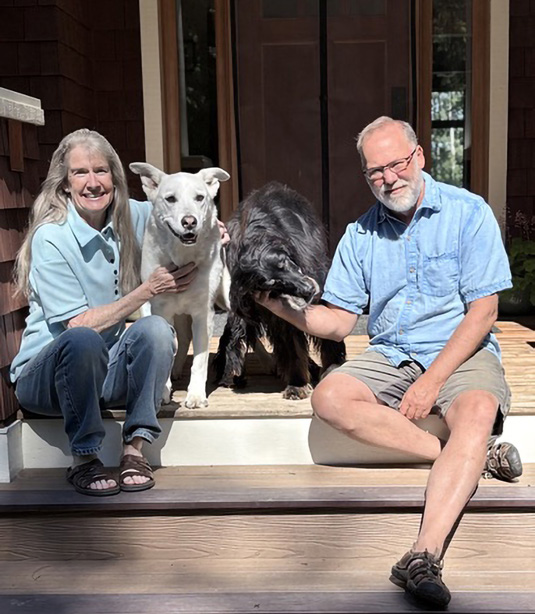
Islander Fred Ramsdell took off in the fall of 2025 to pursue one of his favorite activities. As September turned to October, he, wife Laura O’Neill and their dogs Larkin and Megan spent three-and-a-half weeks exploring the mountains of Washington, Idaho, Wyoming and Montana.
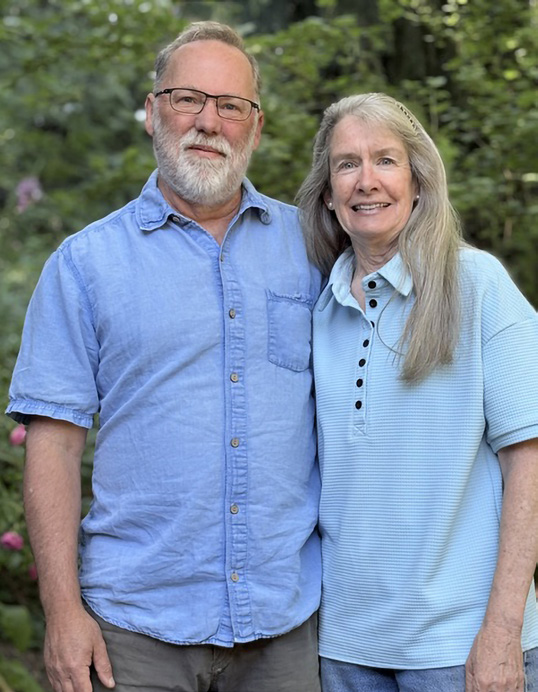
On the last day of their trip, winter came early. “We were up at 8,000 feet, east of Yellowstone, camping off grid, not even in a campground, and it snowed,” Ramsdell said. After digging their Toyota 4Runner and teardrop trailer out from under a six-inch drift, they drove out through Yellowstone National Park, passing elk and bison along the way.
Once they exited the park and got cell reception, O’Neill’s phone began buzzing with text messages. By the time they pulled off at a campground to let the dogs stretch their legs, she had hundreds.
As she looked over the influx, she began shouting. Fearing for a moment that she’d seen a bear, Ramsdell had a hard time processing the actual news. While they had been hiking and camping, cut off from the outside world, he had won the Nobel Prize.
As a kid growing up in Illinois and Northern California, Ramsdell might have been considered an unlikely candidate for a future Nobel laureate.
Initially considering a career as a firefighter or forest ranger, he opted to pursue higher education in part to appease his mom. “No one in my family had ever gone to college,” he said, “and my mother was determined that I was going to go. You don’t disappoint your mother.”
Unable to afford a four-year college, Ramsdell first attended community college, which allowed him to save money while working full time and living at home. After hitting a roadblock in his pursuit of a theater major—”When you can’t dance and you can’t sing, it’s pretty limiting,” he said—Ramsdell became inspired after taking an immunology class. “I literally became an immunologist after the class,” he said, “because it was too cool.”
After two years, he transferred to the University of California, San Diego, where he majored in biochemistry and cell biology. Next, he earned a Ph.D. from UCLA, followed by a post-doctoral fellowship at the National Institutes of Health.
While Ramsdell had entered his studies assuming that he would become an academic scientist, he ended up pivoting to the private sector. “I realized I liked the team science approach that biotech affords, which is not true in academia,” he said. “If I teamed up with people and we all had the same goals, we could be really efficient and effective and move things along.”
That pivot ultimately brought him to Bainbridge Island. After securing interviews at Seattle biotechnology companies, he and O’Neill pulled out a map to study this heretofore unknown part of the world.
“My wife looked at Bainbridge,” he recalled, “and said, ‘Do you think people live on this island?’ and I looked at it and said, ‘Well, there are roads on it, so I’m going to say yes.’” A ferry trip to the island on a crisp October morning, plus the realization that he could bike to work in downtown Seattle, sealed the deal. The couple has now called Bainbridge home for more than 30 years.
Ramsdell’s work focused on how the immune system’s T cells, meant to fight pathogens, would in some cases target our own bodies, causing diseases such as lupus, multiple sclerosis, Crohn’s disease and many more. “We wanted to understand if you could find the fundamental reason why most people didn’t attack their own organs, and some people did,” he said.
The key to unlocking this puzzle turned out to be a very unfortunate rodent known as a scurfy mouse. These mice, named for their flaky skin, had every autoimmune disease in the book. Descendants of a World War II–era radiation experiment, they had been kept alive for decades at the Oak Ridge National Laboratory in Tennessee.
Ramsdell and fellow scientist Mary Brunkow were tasked with finding the faulty gene that caused this mouse’s problems, hoping that this might one day help people with similar conditions. Working out of a converted janitorial closet, they succeeded in identifying the culprit gene after three years. Then, in collaboration with other researchers, they found that mutations on the same gene caused a nearly identical disease in humans.
At the same time, on the other side of the world, Japanese investigator Shimon Sakaguchi discovered the cells that were controlled by this gene, a previously unknown type which he dubbed regulatory T cells (TRegs for short).
TRegs, he found, act as patrol cops for the greater T cell community. If a rogue T cell starts to attack healthy tissue, a TReg swoops in and stops it. When TRegs themselves malfunction, autoimmune diseases can run rampant.
Published at the beginning of the 21st century, these combined findings revolutionized the field of immunology, with scientists racing to translate them into new treatments for a variety of ailments. “The rest of the immunology community took off,” Ramsdell said. “Suddenly we had literally thousands and thousands of scientists working on this. It became one of the biggest areas of research for the next 20 years.”
Fast forward to today, and multiple companies are working to develop targeted, TReg-based drugs for conditions ranging from diabetes to rheumatoid arthritis to ALS, as well as cancer and transplant rejection. Ramsdell expects that we’ll know in the next two to three years if the first iterations of these drugs are effective. If so, he said, they have the potential to not merely treat these diseases, but to cure them.
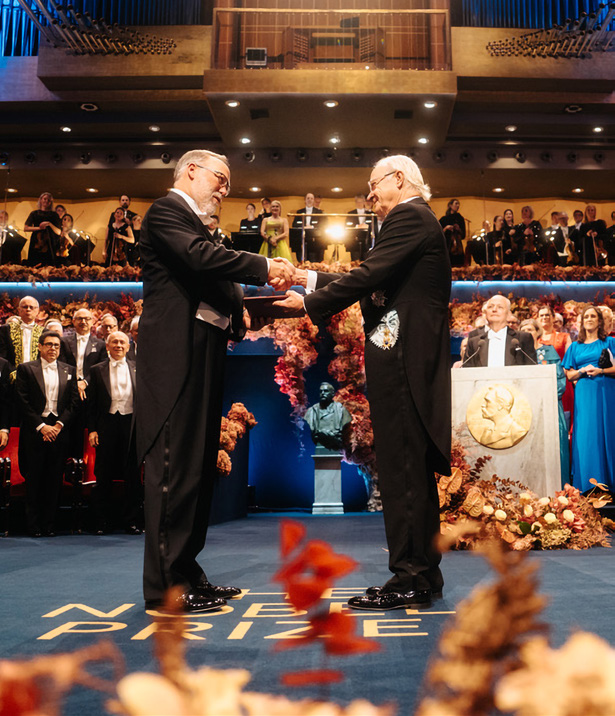
After learning via text that he, Brunkow and Sakaguchi had won the 2025 Nobel Prize in Physiology or Medicine, it was some time before Ramsdell was able to officially accept the award. Once he found enough cell phone service to call the Nobel people back, it was the middle of the night in Sweden, and he could only leave a message. He and O’Neil had their Nobel Prize dinner “around a bar at an Irish pub in Livingston, Montana, eating fish and chips and watching Monday Night Football.” By the time he finally connected with the prize committee, he had, according to Thomas Perlmann, the Secretary-General for the Nobel Assembly, gone down in Nobel history as the hardest person he had ever tried to reach. Ramsdell’s hiking boots are now on display at the Nobel Prize Museum in Stockholm.
Ramsdell retired before receiving the Nobel, but these days his planned R&R feels like a distant dream. He and O’Neill, who split their time between Bainbridge Island and Whitefish, Montana, are frequently on the road for speaking engagements and other requests.
“I did not have a single plane trip planned for 2026,” Ramsdell said. “I now have over 50. I’m going to fly 150,000 miles.”
“We make a calendar every year,” he added, “and the title of our calendar this year was, ‘What the Hell Happened to Retirement?’”